
10
Sep
Boat Motors: Yamaha Buyer’s Guide for Every Budget
Key takeaways
- Yamaha builds boat motors from 2.5 HP portable kickers up to 450 HP V8 offshore engines, so there is a fit for nearly every hull and budget.
- Match horsepower to your boat's length and use first: 15-40 HP suits small aluminum boats, 90-150 HP fits mid-size runabouts, and 200 HP and up powers offshore center consoles.
- Certified pre-owned Yamaha motors can cut thousands off the sticker while still carrying an inspection and warranty, a middle path between new and private-party used.
- Financing and trade-in credit let you spread the cost or roll an old engine's value into a repower without paying full price up front.
If you want a Yamaha boat motor, the right choice comes down to three things: how big your boat is, how you use it, and how you want to pay. Yamaha builds outboards from tiny 2.5 HP kickers to 450 HP V8 offshore powerhouses, so there is a model for a weekend dinghy and one for a serious offshore rig. This guide walks you through the full range, shows how to match a model to your boat, and lays out the new, used, certified pre-owned, and financing paths so you can buy with confidence.
Why Yamaha remains a top pick for boat motors
Yamaha has earned its reputation the slow way, through decades of engines that start reliably and keep running. For boaters weighing brands, a few things stand out.
- Reliability and resale. Yamaha outboards hold their value well on the used market, which matters when you eventually repower or trade up.
- A dealer and parts network. Genuine parts, factory-trained service, and software support are widely available, so a repair rarely means a long wait.
- A clean, quiet 4-stroke lineup. Nearly every current Yamaha is a 4-stroke, meaning better fuel economy, lower emissions, and quieter running than the old 2-stroke engines many boaters remember.
The wider market backs up why buyers keep choosing reliable outboards. Even in a softer year, U.S. dealers sold about 267,000 outboard engines in 2025 at an average retail price of $13,081, a market worth roughly $3.5 billion, according to the National Marine Manufacturers Association. An outboard is a real investment, which is exactly why the engine's track record deserves your attention.
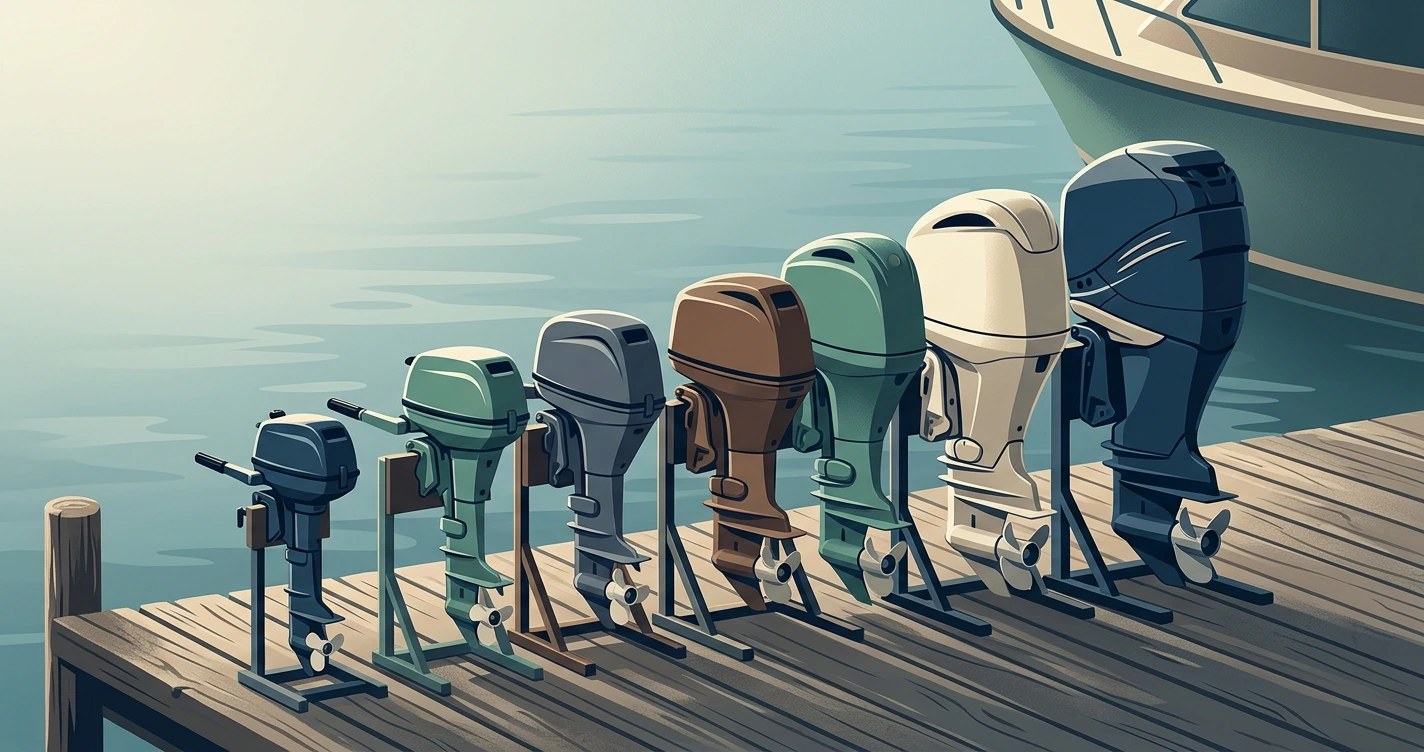
The range: from portable kickers to offshore V8 power
One reason Yamaha suits every budget is the sheer breadth of the lineup. Here is how the families break down.
| Series | HP range | Engine type | Best for |
|---|---|---|---|
| Portable | 2.5 to 25 HP | 1-cyl / twin | Tenders, dinghies, jon boats, kicker motors |
| Mid-range | 30 to 115 HP | Inline 4-cylinder | Small fishing boats, pontoons, family runabouts |
| Inline four | 150 to 200 HP | 2.8L I-4 | Bay boats, flats boats, mid-size runabouts |
| V6 | 225 to 300 HP | 4.2L V6 | Offshore center consoles, larger pontoons |
| V8 XTO Offshore | 425 to 450 HP | 5.6L V8 | Large offshore consoles, sportfishing rigs |
A "kicker" is the small auxiliary engine at the bottom of that chart. Anglers mount one alongside a big main motor for slow, precise trolling and as a get-home backup. At the top end, the V8 XTO models are built for boats that run far offshore, often rigged as twins or triples.
Big power is also where the market is growing. Engines rated 300 HP and greater led all categories in 2025 with 39,700 units sold, per the NMMA, a sign of how many buyers are moving toward larger center consoles and offshore boats.
Matching Yamaha models to boat size and use
Horsepower should follow the boat, not the other way around. Overpowering a small hull is unsafe and can void insurance; underpowering a heavy boat leaves you struggling to get on plane. Start with your boat's length, weight, and how you actually use it.
Quick match guide
- 10 to 14 ft tender or dinghy: 2.5 to 9.9 HP portable
- 14 to 18 ft aluminum or jon boat: 15 to 40 HP
- 18 to 22 ft runabout or bay boat: 90 to 150 HP
- 22 to 26 ft center console: 200 to 300 HP, often as twins
- 26 ft and up offshore: 300 to 450 HP, twins or triples
Always check the capacity plate on your transom for the maximum rated horsepower, and think about how you load the boat. A pontoon full of passengers or a fishing boat packed with gear and fuel needs more grunt than the same hull running empty. If you are torn between two sizes, our guide on how to match the engine to your boat walks through weight, gearing, and prop choice in more detail.
New vs used vs certified Yamaha options
Once you know the model, the next question is condition. Each path fits a different budget and risk tolerance.
Buying new. You get the full factory warranty, the latest technology, and zero history to worry about. It costs the most up front, but for a primary engine you plan to keep for years, the warranty and predictability are worth a lot.
Buying used. A private-party or dealer used engine carries the lowest price. The trade-off is unknown history. A used Yamaha can be a great value if you have it inspected first: a compression test, a look at the lower unit, and a scan of the engine's service records tell you far more than the hours reading alone.
Certified pre-owned. This is the middle path many buyers overlook. A certified pre-owned Yamaha has passed a technician inspection and typically comes with a limited warranty, so you get much of the confidence of new at a used-engine price. Pre-owned boats and engines make up a large share of what changes hands each year, so a well-vetted used motor is a mainstream choice, not a compromise.
At Aquamarine Outboard, every certified pre-owned engine goes through factory-trained diagnostics before it earns the label, so you know what you are getting. If you are weighing your options across brands and budgets, our smart shopper's guide to buying an outboard covers what to inspect and what questions to ask before you sign anything.
Financing and trade-in paths for Yamaha buyers
A Yamaha is a significant purchase, but paying for it does not have to be all at once. There are two levers that make a new engine more reachable.
Financing. Consumer and business marine loans let you spread the cost over months or years instead of draining savings. Getting pre-qualified before you shop tells you your realistic budget and strengthens your position when you negotiate. Fleet operators and charter businesses can often access dedicated business financing for buying several engines at once.
Trade-in and repower. If you are upgrading, the value of your current engine can go straight toward the new one. This is the heart of a repower: you swap an aging or underpowered motor for a modern Yamaha and finance only the difference. Rolling trade-in credit into a loan is one of the most cost-effective ways to move up in horsepower without paying full retail. Aquamarine Outboard handles the appraisal, the swap, and the paperwork so you leave the shop bought, fitted, and ready for the water.
Explore Yamaha boat motors that fit your budget
The best next step is to nail down your boat's length, weight, and typical use, then talk with a dealer about which Yamaha family fits and how you want to pay for it. Whether you are eyeing a portable kicker, a mid-range four-cylinder, or a V8 for offshore runs, Aquamarine Outboard can size the engine, quote new or certified pre-owned options, and set up financing or a trade-in. Request a quote or call the shop to get matched with the right Yamaha and get out on the water sooner.
Frequently asked questions
What size Yamaha boat motor do I need?
Match horsepower to your boat's length, weight, and use. Small tenders run 2.5 to 9.9 HP, mid-size runabouts want 90 to 150 HP, and offshore center consoles typically use 200 HP and up, often as twins.
Are Yamaha outboards 2-stroke or 4-stroke?
Yamaha's current lineup is almost entirely 4-stroke, which runs cleaner, quieter, and more fuel-efficiently than older 2-strokes. A few small portable models remain the exception.
Is a certified pre-owned Yamaha outboard worth it?
Often yes. A certified pre-owned Yamaha has passed a technician inspection and usually carries a limited warranty, so you get much of the peace of mind of new at a lower price.
Can I finance a Yamaha outboard or trade in my old engine?
Yes. Most authorized dealers offer consumer and business financing, and many will apply trade-in credit from your current engine toward a new or repowered Yamaha.
