
8
Sep
Outboard Boat Motors: Match the Engine to Your Boat
Key takeaways
- Shaft length must match transom height: a 15-inch shaft fits a 15-inch transom, a 20-inch shaft fits 20 inches, and so on.
- Federal law requires a capacity plate on monohull boats under 20 feet showing maximum horsepower, weight, and persons.
- A shaft that is too short causes cavitation and overheating, while one that is too long adds drag and cuts speed.
- Twin engines add redundancy and control for larger offshore boats, but a single engine is lighter, cheaper, and simpler.
- Match the engine to how you actually use the boat: torque for fishing, cruising efficiency, or hole-shot for watersports.
The right outboard for your boat comes down to three measurements you can check today: your transom height, the maximum horsepower on your capacity plate, and how you actually run the boat. Get those three right and you get clean planing, good fuel numbers, and years of reliable service. Get them wrong and you fight cavitation, sluggish speed, or a hull that never quite settles.
Outboard boat motors are not one-size-fits-all, and the difference between a great match and a costly mismatch usually shows up in the first ten minutes on the water. This guide walks through each decision the way a factory-trained tech would at the counter, so you can spec an engine with confidence before you buy or repower.
Understanding transom height and shaft length
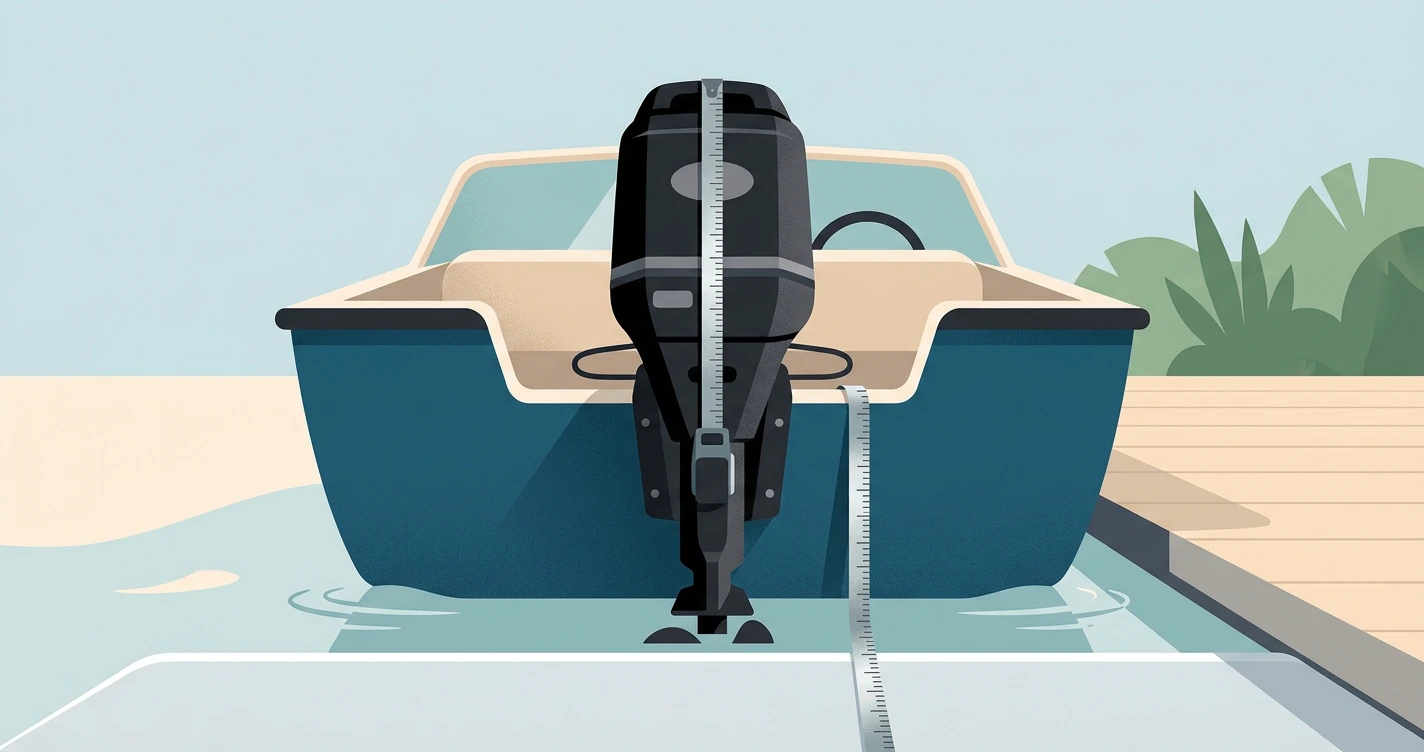
Shaft length is the single measurement people get wrong most often. Your outboard's shaft has to match the height of your boat's transom so the propeller sits at the right depth when the boat is up on plane.
Measure transom height straight down from the top center of the transom to the bottom of the hull. Then match it to a standard shaft length:
- Short (15 inches): dinghies, jon boats, and small tenders with a 15-inch transom
- Long (20 inches): the most common size, fitting most runabouts and mid-size fishing boats with a 20-inch transom
- Extra-long (25 inches): deep-V hulls, offshore center consoles, and larger vessels with a 25-inch transom
- Ultra-long (30 inches): tall-transom specialty and offshore boats
The goal is to keep the anti-ventilation plate (the flat fin just above the propeller) riding near the water's surface at cruising speed. If the shaft is too short, the prop sits high and pulls air down into the blades. That is cavitation, and it robs thrust, lets the engine over-rev, and can starve the water pump so the motor overheats. If the shaft is too long, the lower unit drags through the water, killing top speed and fuel economy, and it risks striking the bottom in the shallows.
If you are repowering and the numbers do not line up cleanly, this is exactly the kind of detail worth confirming with a dealer before you order.
Weight capacity and max horsepower ratings explained
Every boat has a ceiling on how much engine it can safely carry, and it is not a suggestion. Federal regulations under 33 CFR Part 183 require manufacturers to display a capacity plate on monohull boats under 20 feet that are motor-powered, listing the maximum persons, maximum weight, and maximum horsepower the hull is rated for. You can read the horsepower rule directly in the federal capacity standards on eCFR.
Find the plate near the helm or on the transom and treat the horsepower figure as a hard limit. Overpowering a hull raises the transom load, changes how the boat handles at speed, and can make it dangerously stern-heavy in a turn. It also tends to void insurance coverage and can run afoul of state boating law.
Weight matters just as much as horsepower. Every pound of engine, fuel, gear, and passengers eats into the boat's rated capacity. A heavier four-stroke gives you refinement and torque, but on a small hull it can sit the stern low and hurt hole-shot. When you are close to the limit, a lighter engine or a careful gear load can be the difference between a boat that planes crisply and one that plows.
Single vs twin engine setups
For most recreational boats up to roughly 25 feet, a single outboard is the right call. It is lighter, cheaper to buy and maintain, more fuel-efficient at cruise, and simpler to rig. One well-matched engine does everything a weekend on the bay asks of it.
Twin engines earn their place as boats get larger and run farther from shore. The case for two:
- Redundancy: if one engine quits offshore, the other brings you home
- Handling: independent throttles let you spin the boat in its own length at the dock
- Power ceiling: two engines reach combined horsepower a single unit cannot
The tradeoffs are real. Twins cost more up front, burn more fuel, add rigging complexity, and double your service items. There is also a clear industry pull toward big single and multi-engine power at the top of the range. In 2025, engines of 300 horsepower and greater led the U.S. market with 39,700 units sold, according to the NMMA's outboard engine trends report. For most local boaters, though, the honest answer is that a single engine sized to the capacity plate covers the vast majority of use.
If you are still deciding on a brand or model, our guide on how to buy an outboard motor walks through the buying side in more depth.
Matching outboard boat motors to fishing, cruising, or watersports
Two boats with identical horsepower can feel completely different depending on how the engine and propeller are set up for the job. Match the package to how you run:
- Fishing: anglers want low-speed torque and control for trolling, plus enough power to reach the grounds. A four-stroke with strong midrange and a prop pitched for load handles a full livewell and a deck of gear without straining. Higher-horsepower V6 and V8 outboards suit offshore center consoles chasing distance.
- Cruising: efficiency and smoothness win here. A four-stroke matched to the hull's cruise sweet spot, paired with a prop that lets the engine settle into its economical rpm band, delivers the quiet, all-day range that day-trippers and coastal cruisers want.
- Watersports: pulling skiers, wakeboarders, and tubers demands strong hole-shot, the quick acceleration that lifts a loaded boat onto plane fast. A responsive four-stroke with a lower-pitch prop for punch out of the hole gets riders up without lugging the engine.
The engine is only half the equation. Propeller diameter and pitch fine-tune the same powerhead for torque or top speed, which is why two owners of the same boat and motor can want very different props.
Common mismatches that hurt performance
Most performance complaints trace back to a handful of avoidable errors. Watch for these:
- Wrong shaft length: the classic mistake, causing cavitation and overheating (too short) or drag and lost speed (too long).
- Ignoring the capacity plate: overpowering the hull hurts handling and safety and can cost you insurance coverage.
- Wrong propeller pitch: too much pitch and the engine can never reach its rated wide-open-throttle rpm, lugging under load. Too little and it over-revs without delivering speed. Either way, you burn extra fuel and stress the motor.
- Mounting height set and forgotten: even a correct shaft can be bolted too high or too low. Dialing in mount height on the transom is part of a proper rig, not an afterthought.
- Buying on horsepower alone: a number on the cowling tells you little without the right prop, mount height, and weight balance behind it.
Boating is not cheap, and these mistakes compound. With the average U.S. outboard costing five figures today, a mismatched setup is an expensive way to underperform. It is worth getting the spec right the first time rather than fighting the boat every season.
Get an expert engine-matching consult
Matching an outboard to your boat is measurable, not mysterious: confirm your transom height, read your capacity plate, be honest about how you use the boat, and pick the propeller that ties it together. Nail those and the engine does what it should from the first outing.
If you want a second set of eyes before you commit, the factory-trained team at Aquamarine Outboard in San Francisco can match a new, used, or certified pre-owned outboard to your exact hull, spec the right shaft length and prop, and handle rigging and delivery. Bring your boat's numbers or just the make and model, and we will help you get bought, fitted, and delivered, ready to go. Request a quote or book a consult and let us dial in the right engine for the water you run.
Frequently asked questions
How do I know the right shaft length for my outboard?
Measure your transom height from the top of the transom to the bottom of the hull. A 15-inch transom needs a short (15-inch) shaft, a 20-inch transom needs a long shaft, and a 25-inch transom needs an extra-long shaft.
Can I put a bigger engine than the capacity plate allows?
No. Federal regulations require a capacity plate on monohull boats under 20 feet, and exceeding the maximum horsepower rating is unsafe and can void your insurance and violate state law.
Do I need one engine or two on my boat?
Most boats under about 25 feet run fine on a single outboard. Twin setups make sense on larger offshore boats where redundancy, tighter handling, and higher combined power matter.
What happens if my outboard is mounted at the wrong height?
Too high or with a shaft that is too short, the propeller ventilates and loses grip. Too low or too long, drag builds and top speed drops. Correct height keeps the anti-ventilation plate near the water surface at speed.

Comments (2)
[…] are still deciding on horsepower and hull match before you get into service details, our guide on matching the engine to your boat covers how to size a Suzuki outboard to your rig so the efficiency tech actually works in your […]
[…] At the point of sale, a specialist matches the motor to your specific boat, load, and how you actually use the water. That means fewer surprises after rigging and a boat that performs the way you pictured. If you want a deeper walkthrough of that matching process, see our guide on matching the engine to your boat. […]