
Key takeaways
- Most outboard no-start, overheating and rough-idle problems trace back to fuel, cooling or ignition, and many are safe to check yourself before calling a shop.
- A weak or missing water pee stream means stop the engine immediately, since running dry can destroy the powerhead in minutes.
- Machinery failure ranks among the top five contributing factors in U.S. boating accidents, so routine maintenance is a safety issue, not just a cost.
- Factory-trained technicians and proper diagnostics matter most for internal, electrical and cooling-system faults that DIY checks cannot confirm.
- Seasonal service, fresh fuel and annual impeller inspection prevent the majority of the repairs boaters end up paying for.
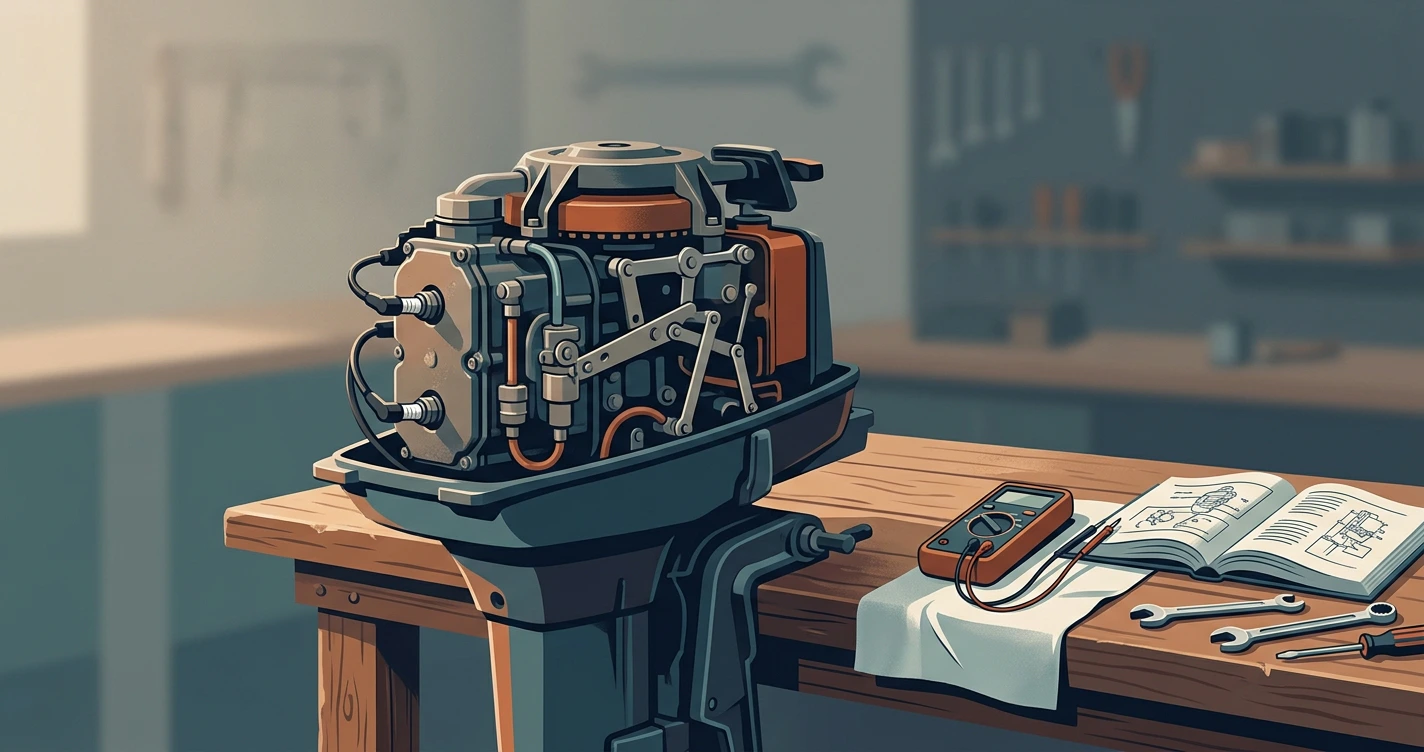
When an outboard quits on you, the culprit is almost always fuel, cooling, or ignition, and a surprising number of these problems you can sort out yourself in the driveway. This guide walks through the four issues that send most boaters looking for outboard motor repair, the quick checks worth doing first, and the point where a factory-trained technician saves you time and money.
Keeping your engine healthy is more than convenience. According to the U.S. Coast Guard's 2024 recreational boating report, machinery failure ranked among the top five contributing factors in boating accidents that year, alongside operator inattention and inexperience (U.S. Coast Guard). A motor that runs right is a motor you can trust when the wind picks up on the Bay.
The Four Outboard Motor Repair Problems We See Most
The vast majority of the repair calls that come through our shop fall into one of these buckets. Knowing the symptoms helps you describe the problem clearly, which speeds up the fix.
1. The Engine Won't Start
A no-start is frustrating but rarely serious. Run through the basics in order:
- Kill switch and lanyard. If the safety clip is missing or loose, the engine will crank but never fire. This is the single most common false alarm.
- Battery. A slow crank or clicking usually means a low charge or corroded terminals.
- Fuel. Stale gas, water in the tank, or a collapsed primer bulb starves the engine. Ethanol-blended fuel that has sat over the winter is a frequent offender.
- Spark plugs. Fouled or worn plugs weaken or kill the spark.
2. Overheating
An overheating alarm or a hot powerhead means the cooling system is not moving enough water. Common causes are a clogged intake, a worn water pump impeller, or a stuck thermostat. Overheating is one problem you should never ride out. Continued running can warp components and lead to expensive powerhead damage.
3. Rough Idle or Stalling
If the motor coughs, surges, or dies at low RPM, the fuel and air mix is usually off. Dirty carburetors, a clogged fuel filter, a leaking fuel line, or gummed-up injectors are typical. On older two-stroke motors, a rough idle often traces back to fuel that has broken down.
4. No Water Pee (Weak Telltale Stream)
That thin stream of water shooting from the side of your cowling, the telltale or "pee hole," confirms the cooling system is working. If it goes weak or disappears, shut the engine down immediately. The most common causes are a clogged telltale outlet or a failing impeller. This ties directly to the overheating problem above, and ignoring it is how a cheap impeller job becomes a rebuild.
Quick DIY Checks Before You Call a Technician
You can rule out a lot without any special tools. Work through this list before booking service:
- Confirm the kill switch lanyard is clipped in. Simple, and it fixes more no-starts than anything else.
- Check the fuel. Look for water, debris, or a sour smell. Squeeze the primer bulb until it firms up.
- Inspect the battery and connections. Tighten and clean any corroded terminals.
- Look at the spark plugs. Black, oily, or worn plugs are cheap to replace.
- Clear the telltale. With the engine off, poke a thin wire into the pee hole to clear buildup, then restart and watch the stream.
- Check the fuel filter and primer bulb for cracks or leaks.
If you are working on a used engine you just bought, many of these same wear points are worth inspecting up front before you ever splash the boat.
When the Problem Needs Factory-Trained Service
DIY checks solve the easy stuff. Some faults need proper diagnostic gear and trained hands. Bring the motor in when you run into:
- Persistent overheating after you have cleared the intake and telltale. This usually means the impeller, thermostat, or a deeper cooling passage.
- Electrical faults like intermittent power, a bad tilt-and-trim, or charging problems that a multimeter alone cannot pin down.
- Internal engine noise, knocking, or a sudden drop in compression.
- Fuel injection or computer codes on modern four-strokes, which require the manufacturer's diagnostic software.
- Lower unit or gearcase issues, including milky gear oil, hard shifting, or vibration.
Marine engines are built to tight standards. Most U.S. boats are constructed to guidelines set by the American Boat and Yacht Council, and repairs done to those standards protect both performance and resale value (ABYC). A trained tech follows them so your fix holds up.
How Our Repair Process Works, From Diagnosis to Delivery
At Aquamarine Outboard, we keep the process transparent so you always know what you are paying for. Here is how a repair moves through our San Francisco shop:
- Intake and diagnosis. We inspect the motor, pull any fault codes, and run the tests needed to confirm the actual cause rather than guessing.
- Written estimate. You get a clear breakdown of parts and labor before we order anything. No surprises.
- The repair. Our factory-trained technicians use genuine OEM and quality aftermarket parts, whether it is an impeller, a fuel system rebuild, or lower unit work.
- Testing. We verify the fix, check the telltale, and confirm the motor runs clean across the RPM range.
- Delivery. We get you bought, fitted, and back on the water ready to go.
If your engine is beyond an economical repair, we can talk repower and financing instead. Many boaters find that a new motor on a monthly payment plan costs less per season than repeated repairs on a tired powerhead.
Preventive Maintenance That Reduces Future Repairs
The cheapest repair is the one you never need. A few habits prevent most of the failures above:
- Use fresh fuel and add stabilizer if the boat will sit. Old ethanol fuel causes a large share of no-start and rough-idle calls.
- Flush the cooling system with fresh water after every saltwater trip. San Francisco Bay salt is hard on internals.
- Replace the water pump impeller on schedule, typically every one to two years, before it fails.
- Change spark plugs and fuel filters at the intervals in your manual.
- Service annually, usually every 100 hours of use or once a season.
- Winterize properly. Our step-by-step winterization checklist walks through fogging, fluids, and storage prep that prevent spring headaches.
Stay ahead of these and you cut your odds of a mid-season breakdown dramatically, and you protect the resale value of the motor.
Get Your Outboard Running Right
If your motor is giving you trouble, do the quick checks first, then let a trained tech handle anything past the basics. Our team in San Francisco diagnoses the problem clearly, quotes it honestly, and gets you back on the water fast. Request a repair appointment or call the shop today, and we will get your outboard sorted before your next trip out.
Frequently asked questions
Why won't my outboard motor start?
The most common causes are a dead or low battery, stale or contaminated fuel, a disconnected kill switch lanyard, or a fouled spark plug. Check those four items first before assuming a major fault.
Can I repair an outboard motor myself?
You can safely handle basic tasks like changing fuel, cleaning connections, swapping spark plugs and checking the kill switch. Internal, cooling and electrical faults should go to a factory-trained technician with proper diagnostic tools.
What does it mean when my outboard has no water pee?
A weak or absent telltale stream usually points to a clogged outlet or a failing water pump impeller. Shut the engine off right away, since running without cooling water can overheat and damage the powerhead.
How often should an outboard motor be serviced?
Most manufacturers recommend service every 100 hours of use or once a year, whichever comes first, along with seasonal winterization and spring commissioning.
How much does outboard motor repair cost?
Simple fixes like plugs, a fuel filter or an impeller are usually modest, while powerhead or lower-unit work costs more. A proper diagnosis tells you exactly what you are paying for before any parts are ordered.
