
15
Sep
Buying Used Outboard Motors: What to Check First
Key takeaways
- A used outboard's maintenance history tells you more than its hour count, so always ask for service records before you talk price.
- Run or request a compression test: cylinders should read within about 10% of each other, and big gaps signal internal wear.
- Milky lower unit oil means water is getting past the seals, which is one of the costliest problems to fix.
- Corrosion around the powerhead, worn anodes, and a saltwater-only history all raise the risk on a used motor.
- A dealer-inspected used outboard removes most of the guesswork that comes with a private-party sale.
A used outboard motor is a smart buy when you inspect the right things first: compression, corrosion, engine hours, and the condition of the lower unit. Skip those checks and you risk paying new-engine money for a motor that needs a rebuild. This guide walks you through exactly what to look at, what the numbers should tell you, and when to walk away.
Used outboard motors sit at a real value sweet spot right now. New outboard prices keep climbing, with the average retail price rising 3.2% to $13,081 in 2025 according to the National Marine Manufacturers Association. That kind of number sends plenty of boaters to the used market, where the same horsepower can cost a fraction of retail. The trick is knowing which used motors are genuine bargains and which are problems wearing a low price tag.
The Real Pros and Cons of Buying Used
Buying used makes sense for a lot of boaters, but it is not a free lunch. Here is the honest tradeoff.
What you gain:
- Lower upfront cost, often 40% to 60% below a comparable new motor
- Faster depreciation is already behind you, so you keep more value at resale
- Access to discontinued models and specific horsepower ranges that fit your boat
- More budget left over for props, rigging, or a service tune-up
What you take on:
- Unknown maintenance history unless you get records
- No factory warranty in most private sales
- Wear items like the water pump impeller and anodes may be due
- The risk of hidden damage from saltwater, impacts, or neglect
The used market is deep, which works in your favor. Americans still bought 267,000 outboard engines in 2025, per the NMMA, and every new motor eventually becomes a used one. With that much inventory changing hands, patience pays. You do not have to accept a questionable motor when a clean one is a few weeks away.
Key Inspection Points on Any Used Outboard
Before you get emotionally attached to a listing, run through these four areas. They cover the failures that cost the most to fix.
Compression
Compression is the single best window into engine health. A mechanic threads a gauge into each cylinder and cranks the motor to measure the pressure each one builds. The exact healthy range depends on whether the engine is a two-stroke or four-stroke and on the specific model, so the number that matters most is consistency between cylinders.
As a rule, all cylinders should read within about 10% of each other. If the highest cylinder reads well above the lowest, something is worn or damaged inside: rings, a valve, or a head gasket. Uniform numbers across all cylinders, even if slightly lower than factory spec, usually point to an engine that has aged evenly and honestly.
Corrosion
Saltwater is hard on aluminum, and San Francisco Bay is saltwater. Look closely at:
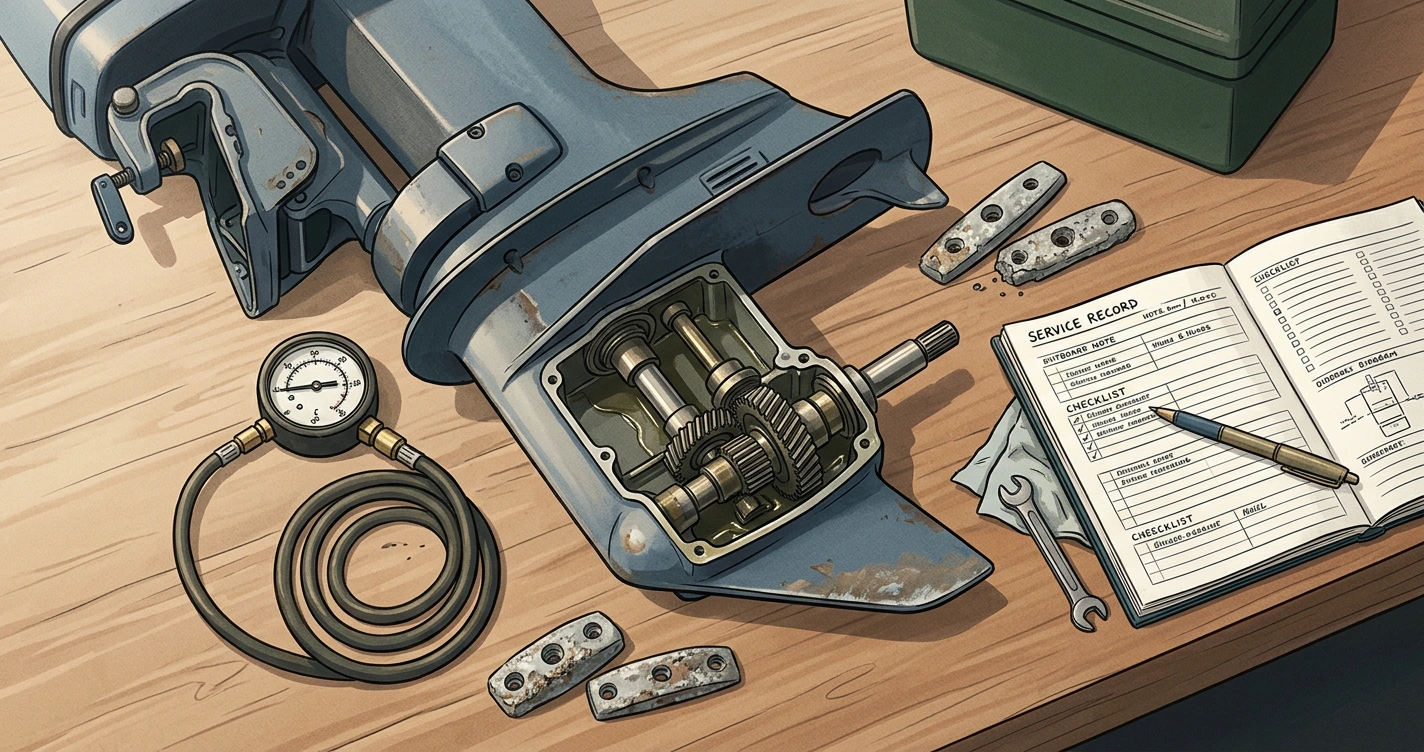
- The sacrificial anodes, or zincs, which should still have plenty of material left rather than being eaten down to nubs
- The lower unit housing for white, chalky oxidation or pitting
- Wiring connectors and the powerhead for green corrosion or crusty buildup
- Bolt heads and mounting hardware for rust streaks
Ask whether the previous owner flushed the motor with fresh water after every saltwater run. That one habit separates a motor that will keep going from one that is quietly corroding from the inside.
Engine Hours
Hours matter, but not the way most buyers assume. A four-stroke that has been serviced on schedule can run well past 1,500 to 2,000 hours, and commercial motors often go far beyond that. A neglected motor with a tenth of those hours can be in worse shape.
Treat the hour reading as one data point, not a verdict. A 500-hour motor with a stack of receipts is usually a safer bet than a 100-hour motor that sat under a tarp for five winters with old fuel in the lines. Sitting unused invites corrosion, gummed carburetors, and dried-out seals.
Lower Unit
The lower unit contains the gears that turn engine power into thrust, and repairs here get expensive fast. Pull the drain plug and look at the gear oil. Clean oil is fine. Milky or cloudy oil means water is getting past the seals, which leads to bearing and gear damage if it is not caught early. Also check the prop shaft for excessive play and inspect the skeg for impact damage that hints at grounding.
Reading Service History and Running a Compression Test
Two things turn a gamble into an informed decision: paperwork and a compression test.
Ask the seller for service records. What you want to see is regular oil and gear oil changes, water pump impeller replacements, and any major work like a powerhead rebuild. A motor with documented, consistent maintenance is telling you the truth about how it was treated. Gaps of several years with no service are a caution flag, especially on a saltwater boat.
For the compression test, you can hire a marine mechanic for a pre-purchase inspection or, if the seller allows it, run one yourself with a compression gauge. The steps are straightforward:
- Warm the engine to operating temperature, then shut it off
- Remove all spark plugs so the engine cranks freely
- Thread the gauge into the first cylinder
- Crank the motor several revolutions and record the reading
- Repeat for every cylinder and compare the numbers
You are looking for readings that land within roughly 10% of each other. A single low cylinder is the most common warning sign, and it usually means the motor needs internal work you do not want to inherit. If you would rather skip the DIY route, our local shop service guide covers what a professional pre-purchase inspection includes.
Red Flags That Signal an Overpriced or Risky Motor
Some warning signs are worth walking away over, no matter how good the price looks.
- A seller who refuses a compression test or water test. An honest seller with a healthy motor has no reason to say no.
- Milky gear oil in the lower unit. Water intrusion is a costly repair and often a sign of deferred maintenance elsewhere.
- Fresh paint on the powerhead or lower unit. It can hide corrosion or crash damage.
- No service records at all. You are buying pure risk.
- Excessive corrosion or anodes eaten to nothing. Saltwater damage compounds over time.
- A price that matches or beats certified inventory. If a private motor with unknown history costs about the same as an inspected one, the inspected motor is the better deal.
That last point is the one buyers overlook most. A slightly higher price on a motor that has been checked over often saves thousands compared to a cheap motor that surprises you a month after purchase.
Why a Dealer-Inspected Used Motor Beats a Private Sale
A private sale puts every bit of risk on you. You are the mechanic, the inspector, and the one holding the bill if something goes wrong. A dealer-inspected used outboard flips that arrangement.
At Aquamarine Outboard, our factory-trained technicians run each used and certified pre-owned motor through the same checks covered above: compression, corrosion, lower unit oil, and a review of whatever service history came with the engine. When something needs attention, we fix it before the motor goes on the floor, not after you get it home. You also get a dealer standing behind the sale, financing options if you want to spread out the cost, and a service department for whatever comes next.
If you are weighing whether to buy from a general boat dealer or a shop that lives and breathes outboards, our comparison on boat dealer versus outboard specialist breaks down what the specialist difference actually buys you.
The math tends to favor the inspected motor. You pay a bit more upfront and skip the roulette of hidden problems, unknown maintenance, and no recourse if the powerhead lets go on your third trip out.
Your Next Step
Make your first move a phone call or a browse, not a leap of faith. If you find a private-party motor you like, book a pre-purchase compression test and lower unit inspection before you hand over a dollar. If you would rather skip the guesswork entirely, take a look at the inspected used and certified pre-owned outboards at Aquamarine Outboard. Every one has already been through the checks in this guide, and our team can walk you through the service history, match the motor to your boat, and sort out financing so you get on the water ready to go. Reach out for a quote or stop by the shop when you are ready.
Frequently asked questions
How many hours is too many for a used outboard motor?
There is no hard cutoff. A well-maintained four-stroke can run 1,500 to 2,000 hours or more, so a 500-hour motor with full records often beats a low-hour engine that sat neglected.
What compression should a healthy used outboard have?
It depends on the engine, but the key rule is consistency. All cylinders should read within roughly 10% of each other, and a mechanic can tell you the expected range for that specific model.
Is it safe to buy a used outboard from a private seller?
It can be, but you take on all the risk. Without a compression test, a lower unit inspection, and service records, you may not learn about problems until after you pay.
What does milky lower unit oil mean?
Milky or cloudy gear oil means water is leaking past the seals into the lower unit. Left alone it leads to bearing and gear damage, so treat it as a serious red flag.
