
19
Sep
Boat Propellers 101: Choosing the Right Prop
Key takeaways
- Pitch controls engine RPM at wide-open throttle, and moving up or down two inches of pitch shifts WOT speed by roughly 400 RPM.
- Lower pitch improves acceleration and hole shot, while higher pitch raises top speed but slows the launch.
- Aluminum props cost less and repair cheaply, while stainless steel holds its shape under load and lasts much longer.
- If your engine cannot reach the top of its rated WOT range under load, your prop is likely wrong for the boat.
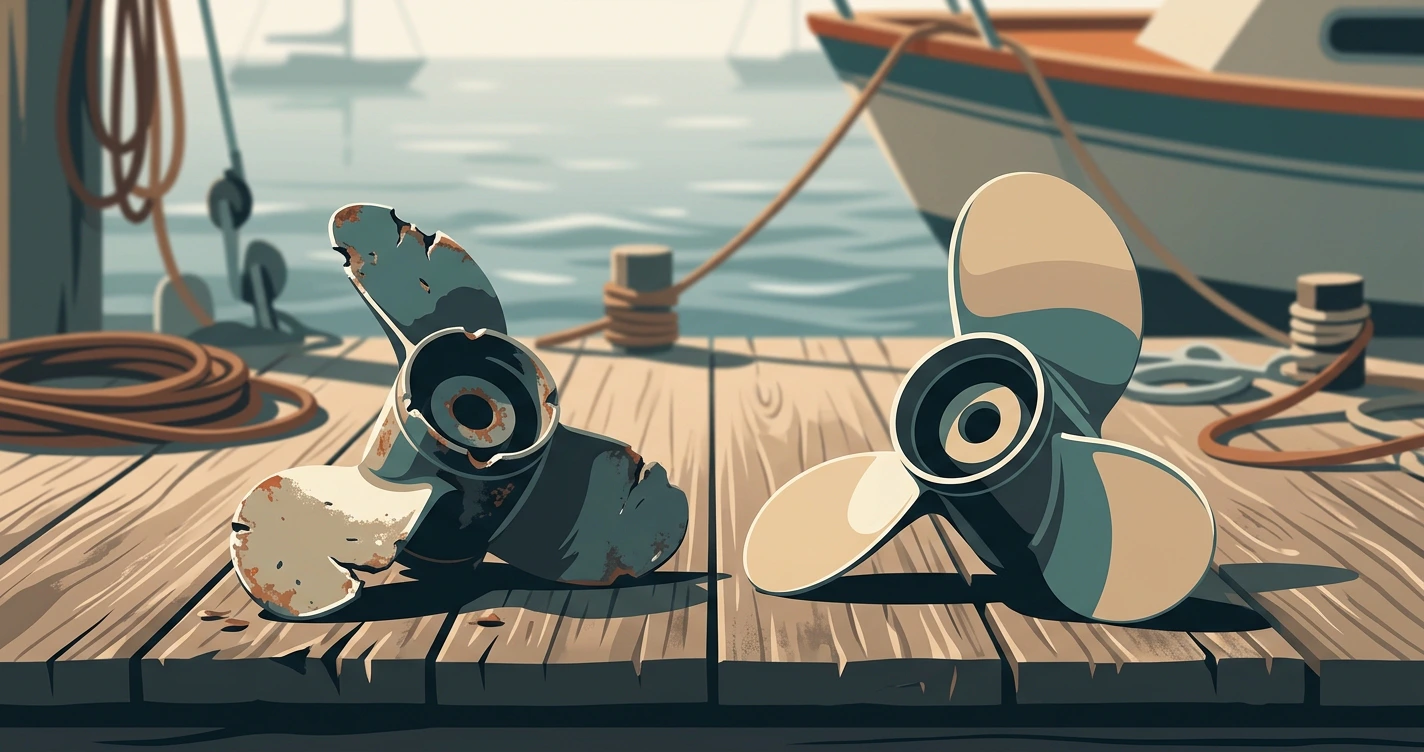
- A spun hub or heavy blade damage usually means replace, while minor dings on stainless steel are worth repairing.
The right boat propeller is the one that lets your engine reach the top of its rated wide-open-throttle RPM range with a normal load on board. Everything else about performance, top speed, quick hole shot, smooth cruising, and good fuel economy, flows from getting that one match right. Boat propellers look simple, but three numbers stamped on the hub decide how your rig behaves on the water, and the metal they are made from decides how long they last.
This guide walks through pitch, diameter, and blade count in plain terms, compares aluminum and stainless steel, shows you the warning signs of a mismatched prop, and helps you decide when a dinged prop is worth fixing.
How Boat Propellers Use Pitch, Diameter, and Blade Count
Every propeller is described by a set of numbers such as 14 x 19. The first number is the diameter, the second is the pitch, and the blade count is listed separately.
Pitch is the distance, in inches, the prop would move forward in one full turn if it were spinning through a solid. It behaves like the gears on a bicycle. A lower pitch is like an easy gear: quick to accelerate, easier on the engine at launch, but limited on top speed. A higher pitch is like a hard gear: more speed once you are up, but a slower, more strained start.
Pitch is the single biggest lever you have over engine RPM. According to Discover Boating, moving up or down two inches in pitch will usually change wide-open-throttle engine speed by approximately 400 RPM. That works out to roughly 150 to 200 RPM for every single inch of pitch. If your engine is spinning too fast at full throttle, you add pitch to pull the RPM down. If it cannot reach its rated range, you drop pitch to let it rev freely.
Diameter is the circle the blade tips trace as the prop spins. Larger diameters generally suit heavier, slower boats that need to push a lot of water, while smaller diameters suit faster, lighter hulls. On most outboards the engine and gearcase already fix a sensible diameter range, so pitch and blade count are where you make your real choices.
Blade count trades efficiency for grip. Three-blade props are the common all-around choice and tend to give the best top-end speed. Four-blade props bite harder, which helps hole shot, keeps heavily loaded boats on plane at lower speeds, and smooths out the ride, usually at the cost of a knot or two off the very top.
Aluminum vs Stainless Steel Props Compared
Most new boats leave the dealer with an aluminum prop. Stainless steel is the upgrade path. Here is how they stack up.
| Feature | Aluminum | Stainless Steel |
|---|---|---|
| Upfront cost | Lower | Higher |
| Blade stiffness | Flexes under load | Holds pitch under load |
| Durability | Dents and bends more easily | Far more impact resistant |
| Repair cost | Low | Moderate |
| Best for | Budget builds, shallow or rocky water, smaller engines | Higher horsepower, performance, offshore |
Aluminum blades are thicker because the metal is softer, and they flex slightly at speed, which bleeds off a little performance. The upside is real: aluminum props are inexpensive, and in shallow or rocky water a sacrificial aluminum blade is cheaper to replace than a damaged lower unit.
Stainless steel blades can be made thinner and stiffer, so they slice through the water with less drag and hold their designed pitch even under hard load. That translates to better top speed and stronger acceleration, and the difference shows up most on engines above roughly 150 horsepower. Stainless costs more to buy and repair, but it shrugs off impacts that would fold an aluminum blade.
If you mostly cruise a small outboard on protected water, aluminum is a sensible, thrifty choice. If you run a higher-horsepower rig, chase offshore fish, or simply want to squeeze every bit of performance out of your engine, stainless steel usually earns its keep. Our team can talk through both options for your exact boat and engine.
Signs Your Current Prop Is Wrong for Your Boat
Your engine's tachometer is the best diagnostic tool you own. Check your owner's manual for the rated wide-open-throttle RPM range, then run the boat at full throttle with a typical load and read the tach. Watch for these signs.
- The engine over-revs. If it climbs past the top of its rated range, the pitch is too low. The engine spins freely but you are leaving speed and efficiency on the table, and prolonged over-revving can hit the rev limiter or stress the powerhead.
- The engine cannot reach its range. If it tops out below the rated band, the pitch is too high. The engine is lugging, which strains the powerhead and gearcase and burns extra fuel.
- A weak hole shot. If the boat plows and takes forever to climb onto plane, especially when loaded, you may need lower pitch, more blades, or both.
- Engine revs but the boat barely moves. This points to a spun hub. The rubber cushion inside the prop has let go and is no longer transferring power.
- Vibration. A new shake at speed often means a bent blade or a nick that has thrown the prop out of balance.
A prop mismatch and an underlying engine problem can feel similar from the helm. If the symptoms persist after you have confirmed the prop is right, it is worth booking a diagnostic with a factory-trained tech to rule out a fuel, ignition, or gearcase issue.
Matching a Prop to Speed, Hole Shot, and Fuel Economy
There is no single perfect prop, only the best trade-off for how you use the boat. Start by deciding what matters most.
- Chasing top speed? Lean toward a three-blade stainless prop and dial in the highest pitch that still lets the engine reach the top of its WOT range under load.
- Want a strong hole shot for skiing, wakeboarding, or heavy loads? Drop a little pitch or step up to a four-blade prop for extra bite off the line.
- Focused on fuel economy? The key is letting the engine cruise inside its efficient RPM band. A correctly pitched prop does exactly that, while an over-pitched prop forces the engine to work harder for every mile.
Real test data shows how sensitive speed is to pitch. In controlled testing published by BoatTEST, the same boat at a 4000 RPM cruise ran 26 knots on an 18.5-inch pitch, 28 knots on a 20-inch pitch, and 30 knots on a 21.5-inch pitch. That is a steady gain as pitch climbs, but only up to the point where the higher pitch starts pulling the engine below its rated range. Push past that and you trade efficiency and engine health for a number on the speedometer that the boat cannot comfortably hold.
The practical move is to pick the prop that keeps you near the top of the WOT range with your normal crew, gear, and fuel aboard. From there, small pitch changes let you bias the setup toward speed or hole shot. If you are also weighing a bigger engine, prop selection and engine choice go hand in hand.
Repair vs Replace: When a Dinged Prop Is Done
Not every ding is a death sentence, and not every prop is worth saving. Cost usually decides it.
Aluminum props are cheap to buy, so heavy damage almost always means replacement rather than repair. Stainless steel is a different story: the metal is expensive, so repairing a good stainless prop often makes sense. Discover Boating puts stainless propeller repairs at $200 to $400, against a new stainless prop that runs between $400 and $700. Aluminum repairs land around $100 to $150, which is why a badly bent aluminum blade is often a quick replace.
Some damage means replace no matter the material:
- A spun hub, where the engine revs but power does not reach the water.
- A cracked or broken blade.
- Damage so extensive that repair costs approach the price of a new prop.
Minor edge nicks and small bends, on the other hand, are routine repairs for a good prop shop, and fixing a balanced prop protects your engine from vibration damage. Keeping a serviceable spare in the boat is cheap insurance for a weekend far from the ramp.
Get the Right Prop for Your Rig
Start with your engine's rated WOT range and a realistic idea of how you load the boat, then choose pitch, blade count, and material to match. If your tach tells you something is off, or you are simply not sure where to begin, the factory-trained team at Aquamarine Outboard can pull the right prop for your engine and how you boat. Browse propellers and accessories, request a quote, or call the shop for a personalized prop recommendation and get back on the water dialed in.
Shop Aquamarine Outboard
All outboard motors for sale · Book a service · Parts & accessories
Related guides
Frequently asked questions
How do I know what size propeller my boat needs?
Match the prop so your engine reaches the top of its rated wide-open-throttle RPM range with a normal load aboard. If it over-revs, add pitch; if it falls short, drop pitch.
Are stainless steel propellers worth the extra money?
For boats over roughly 150 horsepower, stainless steel props often pay off because they hold their pitch under load and last far longer. On smaller engines the performance gain is smaller.
Does propeller pitch affect fuel economy?
Yes. A correctly pitched prop lets the engine run in its efficient RPM band, so it burns less fuel at cruise. An over-pitched prop lugs the engine and wastes fuel.
Should I repair or replace a damaged propeller?
Minor edge dings can often be repaired, especially on stainless steel. A spun hub, cracked blade, or badly bent aluminum prop is usually cheaper to replace than to fix.
What causes a propeller to slip or spin?
The rubber hub inside the prop absorbs shock and can wear out or spin after an impact. When the hub spins, the engine revs but the boat barely moves, and the prop needs a new hub or replacement.
Author

The Aquamarine Outboard team sells, installs and services Yamaha, Mercury, Honda and Suzuki outboard motors from our San Francisco dealership at 1428 Wallace Ave, helping Bay Area boaters choose, finance and maintain the right engine.