
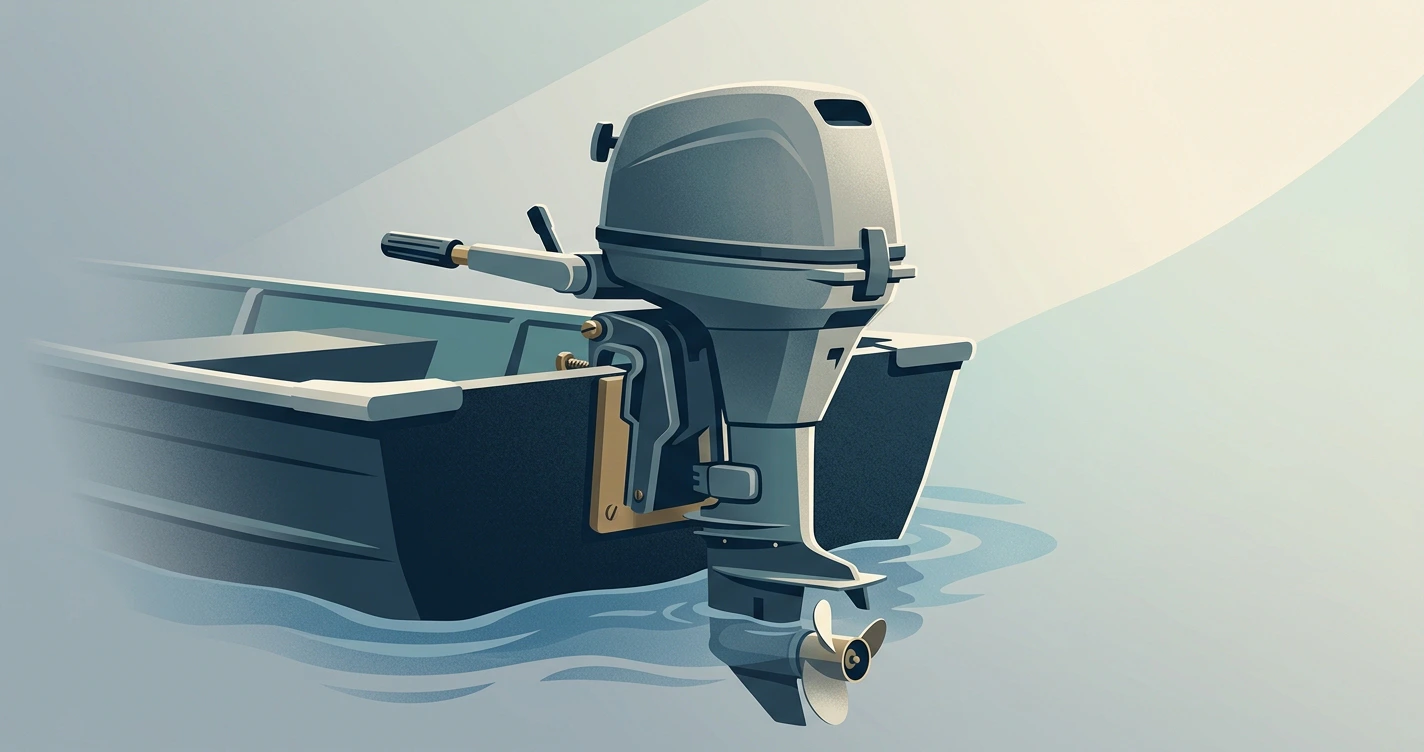
Key takeaways
- A 9.9 HP outboard is the sweet spot for dinghies, sailboats, small skiffs, and as a trolling or kicker motor, often sliding in under the horsepower limits that keep insurance and licensing simple.
- Modern 4-stroke 9.9s run quieter, meet current EPA emissions rules, and deliver meaningfully better fuel economy at cruise than older 2-strokes, at the cost of a few extra pounds.
- Match shaft length to your transom before anything else: 15-inch short shaft for small dinghies and jon boats, 20-inch long shaft for most everything else, 25-inch for sailboats and deep-V hulls.
- Tiller steering keeps a portable 9.9 light and simple; remote steering and high-thrust kicker versions add control for anglers and heavier boats.
If you want one small outboard that handles a dinghy, pushes a sailboat, and doubles as a trolling kicker, the 9.9 HP outboard is the size to buy. It lands in a practical sweet spot: enough punch to move a loaded small boat, light enough for one person to mount and trim, and often just under the horsepower thresholds that trigger extra licensing or insurance hassle in some situations.
That versatility is exactly why the 9.9 outsells almost every other portable class on the water. Below we break down who it is for, how 2-stroke and 4-stroke versions differ, how to match shaft length and steering to your boat, and how the major brands stack up, so you can pick the right one the first time.
Why the 9.9 HP outboard is the go-to for small boats
Plenty of boaters land on a 9.9 for the same reasons. It is the largest motor many people can comfortably carry, lift onto a transom, and store in a garage without a hoist. On a 10 to 14-foot aluminum skiff or a small RIB, it provides enough thrust to plane with one or two people aboard. On a sailboat, it is a dependable auxiliary that gets you in and out of a crowded marina on a windless day.
Here is where a 9.9 earns its keep:
- Inflatable dinghies and tenders that ferry people between a mooring and the dock
- Jon boats and small aluminum fishing boats for lakes, sloughs, and the San Francisco Bay flats
- Daysailers and cruising sailboats that need reliable auxiliary power
- Kicker duty on larger fishing boats, giving you slow-speed trolling control and a get-home backup
A 9.9 is also a smart repower target. If your old 2-stroke kicker is hard to start or burning oil, a modern 9.9 drops right into the same mounting pattern. When you are weighing a rebuild against a fresh engine, our repower financing guide walks through how to spread the cost without the sticker shock.
2-stroke vs 4-stroke 9.9s: weight, fuel, and noise
The biggest decision inside the 9.9 class is engine type. Here is how the two compare in plain terms.
Four-stroke engines run a separate oil reservoir, so you are not mixing oil into the gas. They idle quieter, vibrate less, and burn noticeably less fuel at cruising speed than a comparable 2-stroke. The trade-off is weight. The extra valvetrain and oil system add pounds to the transom.
Two-stroke engines are mechanically simpler and lighter, which still matters when you are hauling a motor down a dock or lifting it onto a dinghy transom by hand. Older carbureted 2-strokes are louder and smokier, though, and they are largely gone from new showroom floors.
Emissions rules are a big reason the market shifted to 4-strokes. In the United States, the EPA regulates outboard exhaust and evaporative emissions under 40 CFR Parts 1045 and 1060, and modern 4-strokes clear those standards comfortably. For most recreational buyers, the quieter, cleaner, thriftier 4-stroke is the easy call. Choose a 2-stroke only if minimum weight is your single most important priority and you can find a clean, modern unit.
| Factor | Modern 4-stroke 9.9 | Modern 2-stroke 9.9 |
|---|---|---|
| Fuel economy at cruise | Better | Lower |
| Weight | Heavier | Lighter |
| Idle noise and vibration | Quieter, smoother | Louder |
| Oil | Separate reservoir, no mixing | Oil injected or premixed |
| New availability | Widely available | Limited |
Tiller vs remote, short vs long shaft
Two fit decisions make or break how a 9.9 performs on your boat: shaft length and steering.
Match shaft length to your transom
Shaft length has to match transom height, or the prop sits too deep (dragging and losing speed) or too shallow (ventilating and cavitating). Measure from the top of the transom down to the bottom of the hull at the centerline, then pick accordingly:
- 15-inch short shaft for inflatable dinghies, jon boats, and small aluminum boats with a low transom
- 20-inch long shaft for most V-hull boats, pontoons, and runabouts; this is the most common and versatile choice
- 25-inch extra-long shaft for sailboats and deep-V offshore hulls with a tall transom
Get this wrong and no amount of tuning fixes it, so confirm your transom height before you order.
Tiller or remote steering
Tiller steering puts a handle right on the motor for throttle and direction. It keeps the package light and simple, which is why most portable 9.9s ship this way. It is ideal for dinghies, small skiffs, and kicker setups where you steer from the back.
Remote steering runs cables to a wheel and throttle at a helm station. It adds a little weight and rigging, but it is what you want on a console boat or when you are controlling the 9.9 from the same seat as your main engine. High-thrust kicker versions often pair remote throttle with a larger-diameter prop for better slow-speed grip.
If your prop choice has you second-guessing, our boat propellers guide explains how pitch and diameter change the way a small motor pushes a load.
Brand snapshot: Yamaha, Mercury, Suzuki, Honda, and Tohatsu 9.9s
Every major marine brand builds a 9.9, and the modern 4-stroke versions are all genuinely good. The differences come down to weight, features, and which dealer network you trust for parts and service. Here is a quick orientation.
- Yamaha offers a standard portable F9.9 plus a T9.9 High Thrust built as a dedicated kicker for pontoons, sailboats, and multi-species fishing boats. The High Thrust gearing and prop are tuned for pushing weight at low speed.
- Mercury runs electronic fuel injection on its current 9.9, which helps with cold starts and smooth idle. Tiller and remote, short and long shaft options cover most boats.
- Honda publishes clear specs for its BF9.9: a 222 cc 4-stroke rated at 9.9 HP, offered in 15-inch (92 lbs), 20-inch (98 lbs), and 25-inch Power Thrust (107 lbs) configurations, backed by a long warranty.
- Suzuki leans on lean-burn fuel efficiency and larger displacement in this class, trading a bit more weight for durability and torque.
- Tohatsu builds some of the lightest 4-strokes in the category and supplies engines that get rebadged across the industry, which makes it a strong value pick in the 9.9 class.
Across the lineup, a modern 4-stroke 9.9 generally lands somewhere in the mid-80s to around 120 pounds depending on brand, shaft length, start type, and whether it is a standard or high-thrust model. If you plan to carry the motor by hand a lot, weight should rank high on your list. If it lives on a transom bracket, feature set and service matter more than a few pounds.
Trolling and kicker uses for anglers who want fine control
For fishing, a 9.9 is more than a backup. As a kicker, it gives you precise slow-speed control that a big main engine simply cannot match at trolling RPM. You can hold a steady 1.5 to 3 mph along a drop-off, work a shoreline, or keep a controlled drift without constantly bumping a 250 in and out of gear.
High-thrust 9.9 models help here. A larger-diameter prop spun at lower pitch moves more water at low speed, which translates to better bite at trolling speed and more muscle when you are nudging a heavy boat around the dock. Anglers chasing salmon and stripers around the Bay and Delta lean on exactly this setup. Pair the kicker with a tiller extension or a remote throttle and you can fish all day with one hand on the wheel.
Whatever you run, keep the little motor healthy. A kicker that sits idle between trips is the first engine to foul a carburetor or gum up fuel, so a seasonal winterization routine keeps your 9.9 ready for opening day.
Picking your 9.9 and the next step
Start with the fit decisions, because they are the ones you cannot undo: measure your transom to lock in shaft length, then decide tiller or remote based on where you steer from. Choose a 4-stroke unless minimum weight truly rules your decision. After that, pick the brand whose dealer and service network you want standing behind the motor for the next decade.
That is where it helps to buy local. At Aquamarine Outboard in San Francisco, we carry new, used, and certified pre-owned 9.9 HP outboards across every major brand, handle the rigging and prop selection, and offer flexible financing so you are bought, fitted, and ready to go. Browse our current outboard motors for sale, or call the shop for a quote and we will help you match the right 9.9 to your boat.
Shop Aquamarine Outboard
All outboard motors for sale · Financing options · Request a quote
Related guides
Frequently asked questions
What size boat is a 9.9 HP outboard good for?
A 9.9 HP outboard suits inflatable dinghies, jon boats, small aluminum skiffs, and most sailboats up to roughly 20 to 25 feet as auxiliary power. It is also a popular kicker motor on larger fishing boats.
Is a 2-stroke or 4-stroke 9.9 HP outboard better?
For most buyers today a 4-stroke is the better pick. It is quieter, cleaner, and more fuel efficient at cruise. Two-strokes are lighter and simpler, which still appeals when every pound on the transom matters.
What shaft length do I need for a 9.9 HP outboard?
Measure your transom height. A 15-inch transom takes a short shaft, a 20-inch transom takes a long shaft, and a 25-inch transom (common on sailboats and deep-V hulls) takes an extra-long shaft.
Can a 9.9 HP outboard be used as a kicker or trolling motor?
Yes. A 9.9 HP outboard is one of the most common kicker and trolling choices for anglers. High-thrust versions with larger props give fine throttle control at slow speeds for working a shoreline or holding a drift.
